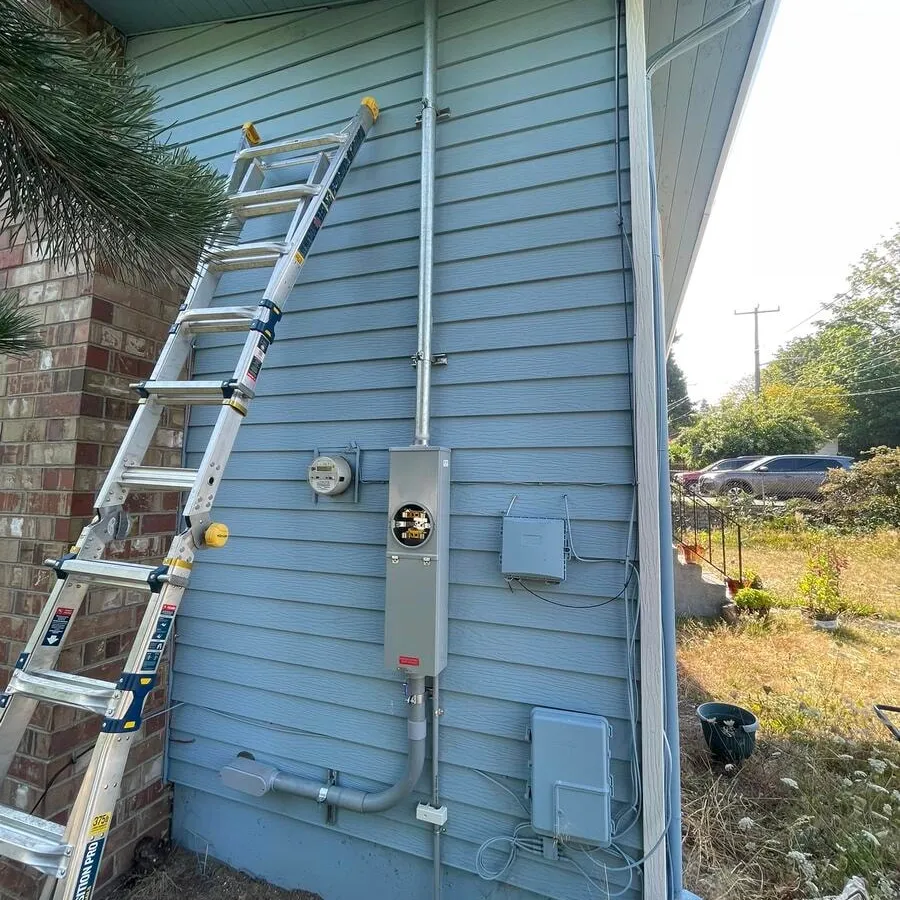
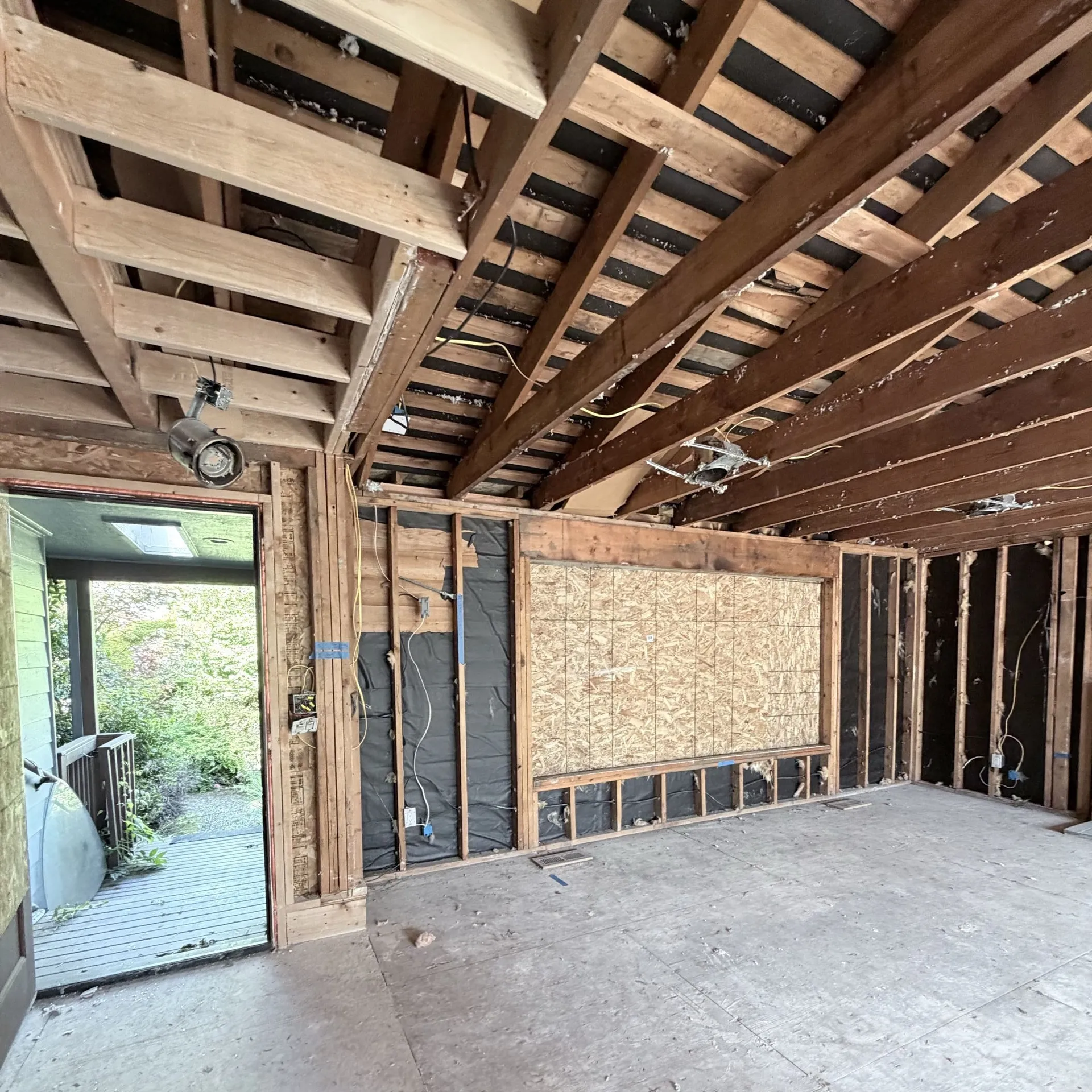
Living room stripped back to the framing around the fireplace, with the carpet, drywall and old wiring pulled out

Home Rewiring in Seattle

Knob-and-tube, aluminum, and damaged wiring replaced with modern copper by licensed electricians. Whether you are having electrical issues, remodeling, or getting ready to sell your home, we rewire anything from a room to the whole home.

Licensed, Bonded, & Insured
Over 100 Five-Star Reviews
Free Estimates
Upfront Pricing
Permits and Inspection Included
2-Year Warranty
Call(425) 202-5529

WA Lic #CHARGCH761KL · Most jobs scheduled the same week

Why Rewire

Why Rewire a House?

Outdated Wiring

Knob-and-tube, aluminum, and outdated two-wire copper can be unsafe and unreliable

Recurring Issues

Wire damage or age can cause any number of intermittent issues such as frequently tripping breakers

Insurance

Many insurers will not write a policy or add a surcharge for outdated wiring

Knob-and-Tube, Aluminum, and Old Copper

What Kind of Wiring Does My House Have?

Three types of outdated wiring turn up in older homes around Seattle. Each brings its own risks and each has its own set of options for bringing it up to modern standards.

Knob and Tube Replacement

Common in homes built before 1950. Individual conductors run through porcelain knobs and tubes, with no ground and no cable sheath.

Partial Replacement

Where possible, we can replace only the knob-and-tube still in service, which is often quicker and costs less.

Full Copper Rewire

Every branch circuit replaced with grounded copper and all old knob-and-tube comes out or is de-energized.

Many insurers will not write or renew a policy on a home with live knob-and-tube.

Ungrounded Two-Wire Copper

Common in homes built in the 50s and 60s. Cloth-sheathed copper with a hot and a neutral and no equipment ground.

Add GFCI Protection

A two-prong outlet can be replaced with a GFCI and labeled as having no equipment ground. Makes the outlet safe to use, but does not add a ground.

Modern Copper Rewire

New grounded copper run to every device. It is the only way to actually put an equipment ground behind your outlets.

Insurers do not usually object to ungrounded copper, but the lack of a ground can put sensitive electronics at risk.

Aluminum Wiring Replacement

Common in homes built in the 60s and 70s when copper was expensive. Aluminum expands, contracts, and oxidizes at relatively low temperatures, so connections loosen over time.

Pigtail Repair

Every device, splice, and junction is opened, and the aluminum is pigtailed to a short copper tail with a connector listed for the purpose.

Full Copper Rewire

The aluminum branch circuits come out and grounded copper goes in. The more permanent solution to fully modernize your home.

Insurance requirements vary greatly on aluminum wiring. Some surcharge it, some decline it outright, and some accept a documented pigtail repair. Ask yours which before you choose, and we will quote both either way.

Modern Copper Wiring

Modern NEC standards for wiring a home provide several key advantages to ensure your home is safe and can handle any situation you throw at it.

Insulated Copper Conductor

Copper conductors are sheathed in a durable thermoplastic jacket rated well beyond anything a household circuit will put through it

A Ground at Every Device

An equipment ground is carried through to every outlet and switch, keeping all of your sensitive electronics and devices safe

GFCI and AFCI Protection

A ground fault in the wet rooms or an arc inside a wall cuts the power before it can start a fire, which is protection none of the wiring above was built with

Circuits That Keep Up

Dedicated circuits for the kitchen, laundry, and bathrooms, so the breaker stops tripping when the microwave and the kettle are running together

If your house has cloth-wrapped wire that crumbles when you touch it, two-prong outlets, a cover plate that is warm, or breakers that trip for no reason. Call (425) 202-5529 today and we will come and take a look, free and with no obligation.

Entry room stripped and staged for a rewire, with the drywall and carpet out and the window boarded over
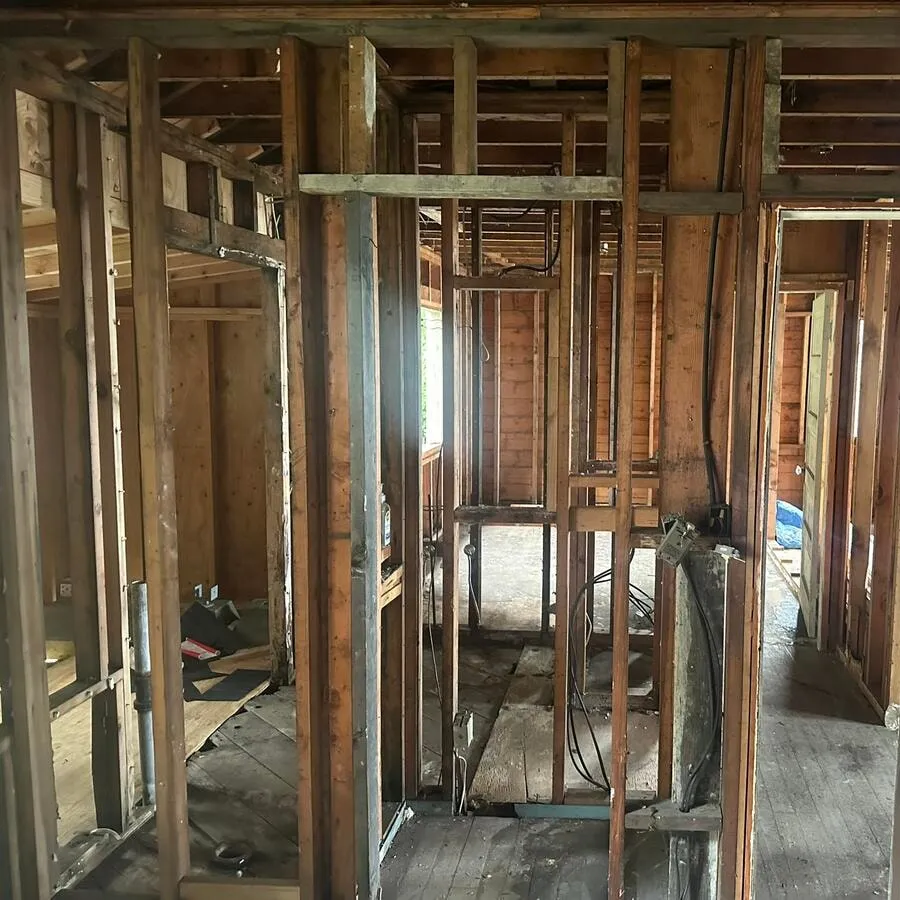
New wiring pulled through the open walls of an old house during a whole-home rewire
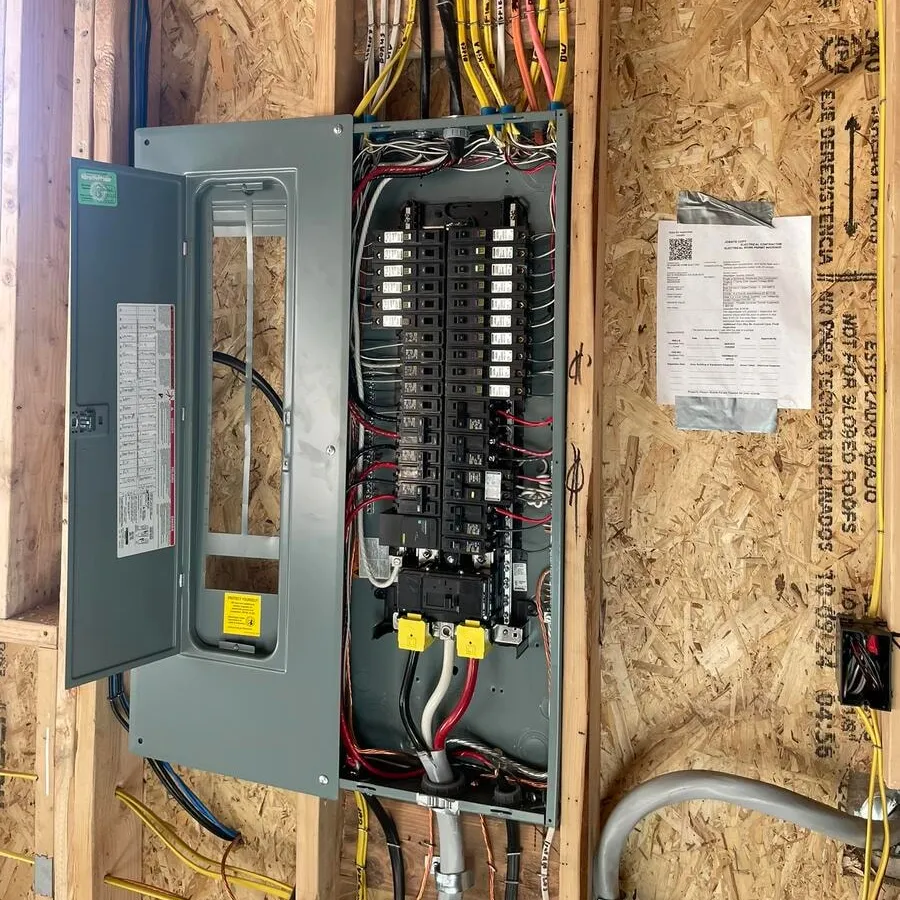
Panel fully wired and labeled at the end of a new construction rough-in

Partial Rewires and Repairs

How Does Partial Rewiring and Repair Work?

Not all bad wiring is old wiring. Whether it was water damage, fire damage, rodents chewed through, or the old homeowner left a bunch of bad splices, we will identify the issues and re-run only the offending circuits.

Finding the Fault

The circuit comes off at the panel and is tested at access points where a cable can be reached without drywall damage such as the attic, the crawlspace, and the junction boxes along the circuit.

Replaced Box to Box

A damaged cable or splice is replaced from box to box rather than spliced where it failed so nothing is left buried in a wall to cause issues down the road.

Not sure which circuit is the problem or if a rewire is necessary? Tracking down the issue in many cases starts as an electrical troubleshooting visit first. Based on what we find, we can help you make an informed decision about whether a repair or a full or partial rewire is the right answer. Call (425) 202-5529 and we can answer any questions and get you on the schedule.

What It Costs

What Determines a Whole-House Rewiring Cost?

Square footage alone isn't always accurate, the cost really boils down to these three factors:

Access to Circuits

Open walls, attic access, or crawl spaces can lower the cost if they provide ample access

Total Circuit Count

Rewired homes usually end up with roughly double the circuits the old wiring had

Panel and Service Capacity

An old panel rarely has room, so a panel or service upgrade is often necessary

Every quote we write is upfront, itemized, and carries no obligation, so you can see what is driving the cost before you agree to anything. It includes the permit, inspections, and any coordination with the city or the utility that the job requires.

What Determines an Aluminum Pigtail Repair Cost?

The number of connections we need to pigtail. If you choose this option, we will provide a detailed quote including the count of connections we need to repair as well as any additional work you want done at the same time.

Do I Really Need a Full Rewire?

Often not immediately. Just because your wiring is old does not mean it needs to be replaced immediately if you are not having any other issues. However, if a significant remodel is anywhere in your plans, open walls make all of this much cheaper, so rewiring alongside it costs a fraction of coming back to open the same walls twice.

Customer Reviews

Real Reviews From Recent Rewires

Amir M.

Kirkland

“Troy, Kadin, and their team are truly exceptional! They completely remodeled and updated my entire house’s electrical system, lighting, and installed an EV charger in my garage. I was thoroughly impressed by their professionalism, expertise, punctuality, honesty, trustworthiness, and respect. They not only exceeded my expectations with competitive pricing but also delivered high-quality work. I highly recommend them for any future electrical projects and would definitely hire them again.”

Occidental G.

Seattle

“Prompt, professional and price was worth every penny! We were in the middle of gas fireplace project when we needed electrician immediately. We have an older home, so this two man team check fuse box, outlets, switches, junction boxes... not giving up discovered a wire from an "honey do" ceiling fan. Lastly, we are grateful for their perseverance and patience. Definitely, will be using In Charge Home Electric for our electrical needs.”

Yinzhi C.

Seattle

“Troy and his team are amazing! They are so easy to communicate with, friendly, kind, trustworthy and professional. They installed the new wires for our kitchen and even helped us to clean up the messy area under the panel that the previous team left us with. How wonderful are they! The inspection afterwards was very smooth. I would highly recommend In Charge Home Electric if you need electric projects!”

Over 100 five-star reviews across Google, Yelp, and more. See all reviews

Common Questions

Frequently Asked Questions

Access drives it more than size does: an accessible attic, a basement or crawlspace, and open walls cost a fraction of a two-story plaster house with none of them. We quote the whole job upfront and itemized after a free walkthrough, permit included, so nothing reaches the invoice that you have not already seen.

Nothing puts you on a deadline, and plenty of it has run undisturbed for eighty years. What forces the issue is usually someone asking about it: a carrier at renewal, or an inspector during a sale. If either is coming up, it is easier to do this on your own schedule than on theirs.

The wire is not the hazard; the terminations are. Aluminum expands and oxidizes where it is clamped, so over decades a connection at an outlet or a splice can loosen and run hot. That is why every accepted repair works on the connections rather than the cable, and why a house with aluminum and no symptoms is still worth looking at.

In most cases, yes. We work one area at a time, leave power on everywhere we are not working, and have that day's circuits live again before we leave each evening. The one full shutdown is the day we cut over to the new panel, six to eight hours, and you get that date at the start of the job. We need working access to the walls, the attic hatch, and the crawlspace. Clear anything breakable and leave the rest to us.

Three to seven days for most homes, driven far more by access than by size. Aluminum remediation is often quicker, at two to five. Add roughly a day plus utility scheduling if a panel or service upgrade is part of it. Both inspections happen inside that window rather than after it.

We fish new cable through attics, crawlspaces, and closets wherever the house allows, and open small access points where it does not, usually low on a wall or inside a closet rather than in the middle of a room. We patch everything we open. Taking the finish back to paint is a separate trade, which we can coordinate or leave to your own contractor.

Yes, everywhere we work. Seattle runs its own electrical permits and inspections, and Washington L&I covers most of the surrounding cities. There is a rough-in inspection while the new wire is still open, then a final once the devices and panel are finished. We pull the permit and meet both inspectors, and it sits inside the quote rather than on the invoice.

Outlets and switches, yes. Every device goes back as a new grounded, tamper-resistant one, with GFCI protection in wet areas and AFCI across the living spaces, all in the quoted price. Light fixtures are yours: we take them down, rewire the box, and put the same ones back. If you want new fixtures fitted while the ceilings are open, we will quote those alongside.

Yes, and it is the usual case. A house with knob-and-tube very often still has the fuse panel that came with it. The panel gets replaced as part of the project rather than after it, which keeps the whole thing on one permit and one inspection schedule.

Asbestos in pipe wrap, or vermiculite in an attic, is licensed abatement work rather than electrical work, so we stop, tell you what it blocks, and pick the job back up once it has been cleared. For anything else the house turns up, such as a buried junction box behind finished plaster, we show you what we found and price the correction before touching it. Anything the inspector raises on our own work is ours to fix at no cost.

Free Estimate

Get Your Free Estimate

We respond to most requests within the hour, but will get back to you within a day at the latest.

Preferred Contact Method

Photos (optional)

Add details (optional)

What's Included in Every Rewire

  • Whole-home wiring and load assessment
  • New copper branch circuits throughout
  • Grounded, tamper-resistant receptacles
  • GFCI and AFCI protection to current code
  • Old wiring removed or safely de-energized
  • Permit, rough-in and final inspection
  • Full warranty on all work
  • Workmanship and quality guarantee

Prefer to talk it through?

How It Works

From First Walkthrough to Final Inspection

1

Tell Us About the House

Call, email, or use the form. The year it was built, whether there is an attic or a crawlspace, what your insurer has said, and a photo of the panel and of any wiring visible in the basement tell us most of what we need.

2

Free In Person Walkthrough

A licensed electrician walks it with you, opens a device or two to see what is really in the walls, counts the circuits the finished house needs, says whether the panel has to grow with it, and prices the whole thing upfront with the permit included.

3

Rewired and Inspected

We pull the permit and work area by area if the house is occupied. Most homes take three to seven days. We meet the rough-in inspector before anything is covered and the final inspector at the end, then hand you the records your insurer will ask for.

In Charge Home Electric serving the Greater Seattle area

Our Service Area

Home Rewiring Across Greater Seattle

We replace knob-and-tube, aluminum, and damaged wiring with modern copper from Seattle to Mount Vernon, and handle all of the required permits and inspections for whichever city you are in. Free estimates, upfront pricing, and a full warranty are the In Charge Home Electric standard for all projects.

Our service area includes

SeattleBellevueRentonKirklandRedmondBothellShorelineBurienTukwilaEverettArlingtonMount VernonLynnwoodMarysvilleEdmondsKenmoreMercer IslandSnohomishSammamishMedina

and surrounding communities